Dealing With a Repossession
Lost the Car — Don't Let the Entry Keep Costing You
A repossession on your report can shut down the next car loan before the conversation starts. The first step is reading the entry the way the bureaus wrote it — the balance, the dates, and whether the facts line up.
A repossession entry usually carries a balance after the sale, a string of late marks leading up to it, and a status that may not match what the lender told you at the time. Folks around Oak Cliff and Pleasant Grove run into this when the next dealership pulls the file and the old repo is the first thing they see — and the problem gets worse when the balance looks wrong, the dates don't match, or the account is listed twice.
We sit down with the repossession entry on each bureau and compare it against your records from the lender. Nobody can promise a repossession will come off your report — an accurate repossession generally stays — but an entry with a wrong balance, wrong dates, or duplicate reporting may be challenged through a factual dispute.
These are actual results from past clients, previously shared on Instagram. Every credit file is different, so treat these as examples of what the process can look like, not as a promise of what yours will do.
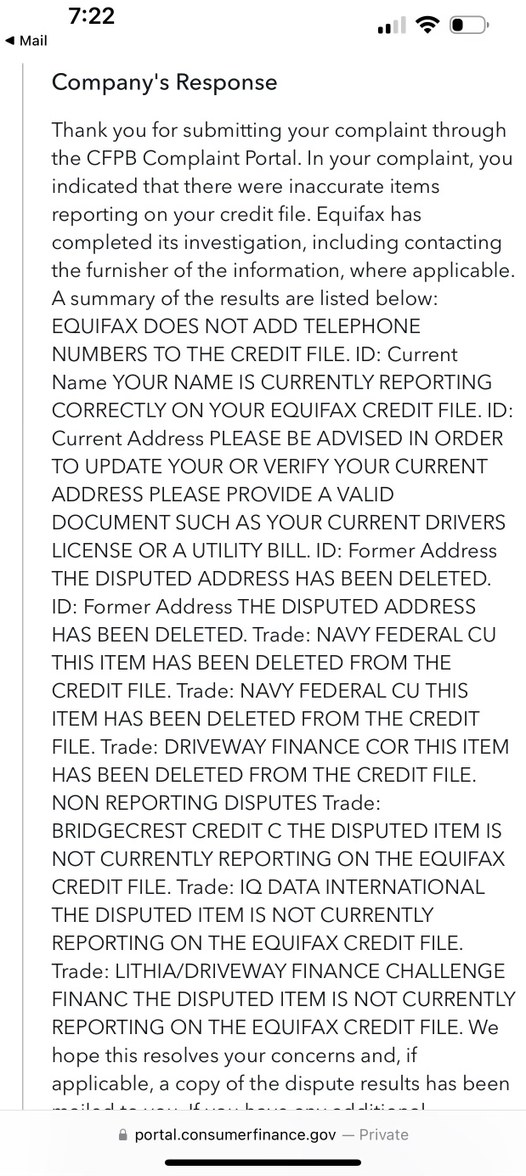
Equifax deleted two Navy Federal accounts and a Driveway Finance account after a CFPB complaint, March 2024.
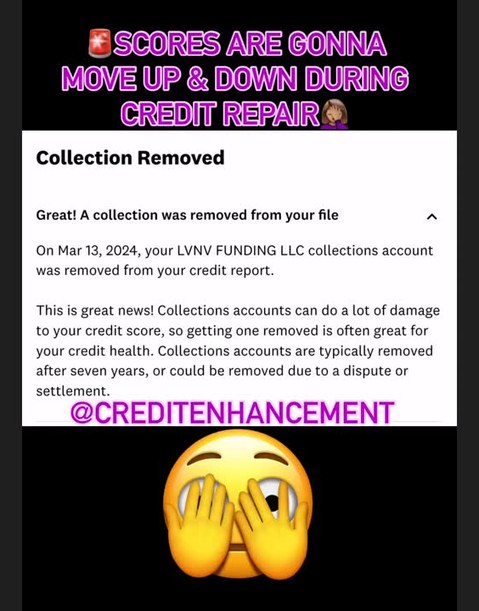
LVNV Funding collection removed from the report, March 2024.
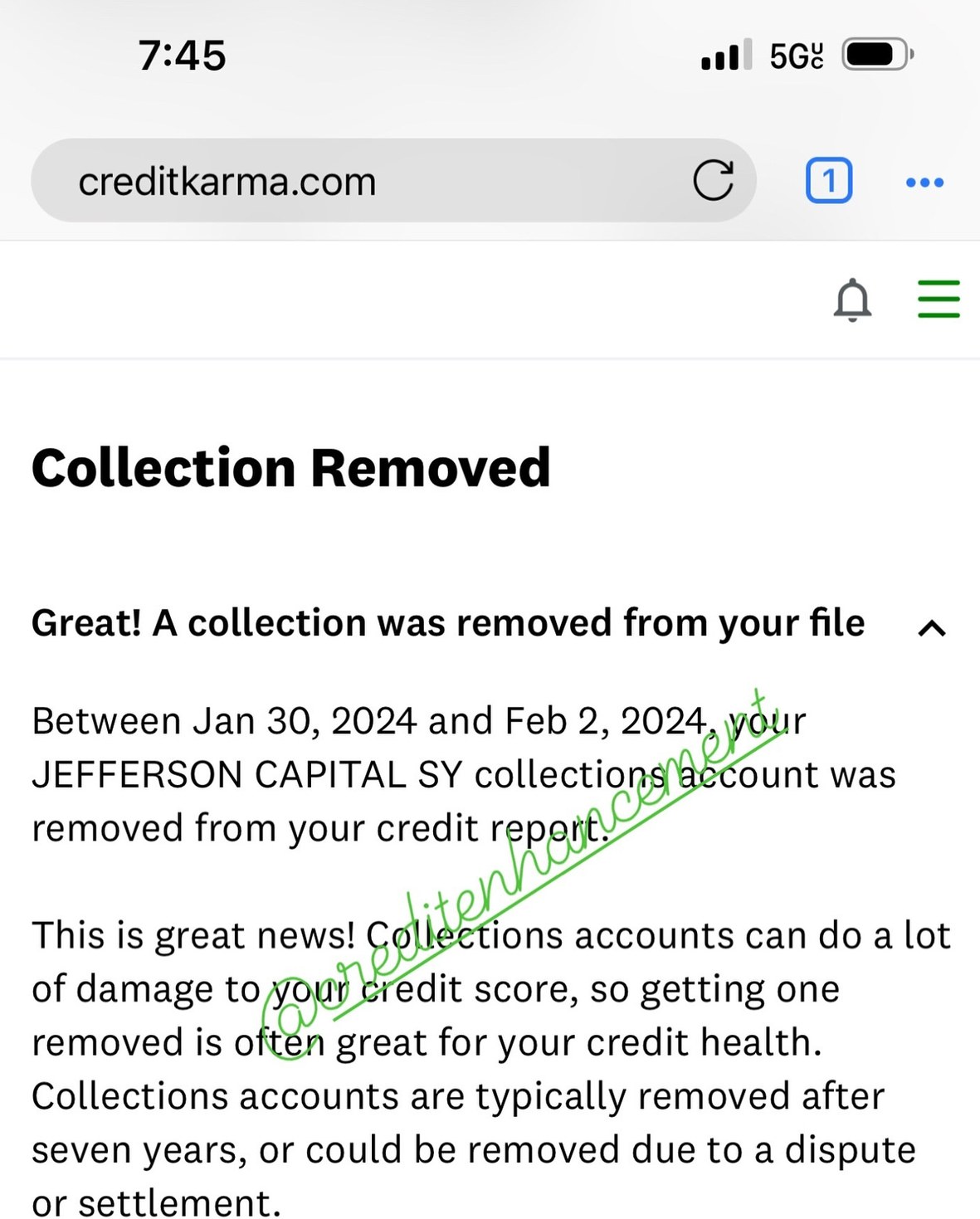
A Jefferson Capital collections account was removed from a client's credit report in February 2024.
Results vary from person to person and depend on what is in each credit file. Nothing here promises a particular score increase or deletion.
A repossession is hard to deal with when you cannot see it — the balance after the sale, the dates, and which bureau is reporting it. For a dollar, you can read every repossession entry on all three reports and see the facts as the bureaus list them.
Facts first, then a plan. The look costs a dollar.
$1 opens 7 days with MyScoreIQ and the price after that week is $34.99 a month. Cancel any time.
Repossession entries carry more moving parts than most people expect. We help you understand each piece and spot where the reporting may not match your records.
We look at the deficiency balance shown after the vehicle was sold, and check it against the lender's own accounting.
We look at the late marks and the repossession date, and check them against your payment records and the lender's timeline.
We check whether the same repossession is listed twice — by the lender and by a collector — or reported differently across bureaus.
We look at who owns the account now, whether it shows as a collection, and whether the status matches what you know.
We go over whether the entry has inaccurate information that could support a challenge to the bureau or the furnisher.
A repo involves the lender, the sale, and sometimes a collector. Getting the details straight comes first — before you do anything.
Finding inaccurate information is where we focus — not on suggesting that every repossession entry can be removed.
We talk through what lenders look at after a repo, so your next application is not a surprise.
We talk through the repossession entries showing on your credit reports, one by one.
We help you review balances, sale dates, and reporting status — each detail, checked.
We help you pick out information that appears inaccurate, incomplete, or inconsistent with your records.
We explain dispute options, communication strategies, and practical credit habits for going forward.
When a repossession entry has wrong information in it — a wrong balance, wrong dates, or the same account listed twice — that may be challenged through a factual dispute. An accurate repossession, though, generally stays on the report.
A repossession can generally remain on a credit report for up to seven years from the date of first delinquency on the account. The reporting rules decide the timeline.
After the sale, the lender may report the remaining amount as a deficiency balance. We can help you check whether the balance shown matches the lender's own accounting.
Some lenders will consider an application after a repossession, often with different terms. We can talk through what lenders tend to look at and how to prepare before you apply.
A repossession on your report is not the final word on your finances. Let us talk through what you can do. Call (469) 281-1250.