Dealing With Medical Collections
You Went to the Doctor — the Bill Shouldn't Chase Your Credit Forever
A medical bill can turn into a collection before you ever saw the paperwork, and it can sit on your report while you are still sorting out insurance. The first step is reading the entry the way the bureaus wrote it — the amount, the dates, and whether the facts line up.
Medical collections in Dallas often start at a hospital or clinic visit — Parkland, Baylor, a neighborhood urgent care — and then the bill moves to a collector while insurance is still being sorted out. The entry on your report may not match the bill you remember: the amount can be wrong, the date of service can be wrong, or the account may belong to a visit you already paid for.
We go through each medical collection with you and compare it against your bills, insurance explanations, and payment records. Paid medical collections are removed from credit reports under the current bureau rules, and unpaid medical collections under $500 are excluded — but an entry with wrong information may also be challenged through a factual dispute. Nobody can promise a medical collection will come off your report beyond what the rules already provide.
These are actual results from past clients, previously shared on Instagram. Every credit file is different, so treat these as examples of what the process can look like, not as a promise of what yours will do.
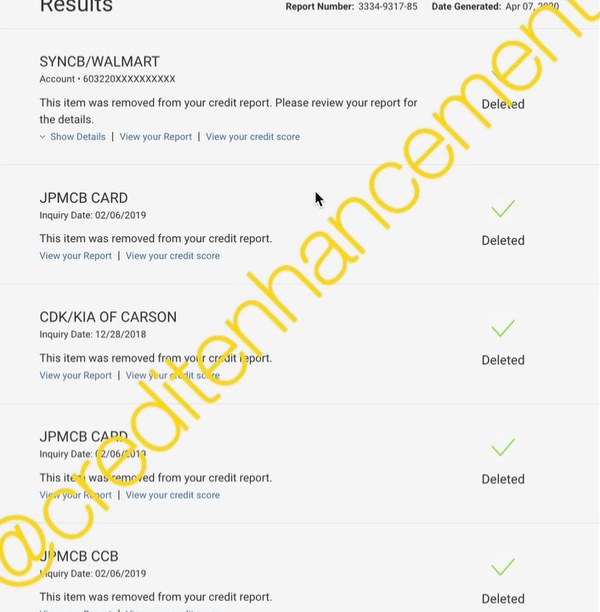
Five items — a store card account and four hard inquiries — were deleted from a client's Experian report in April 2020.
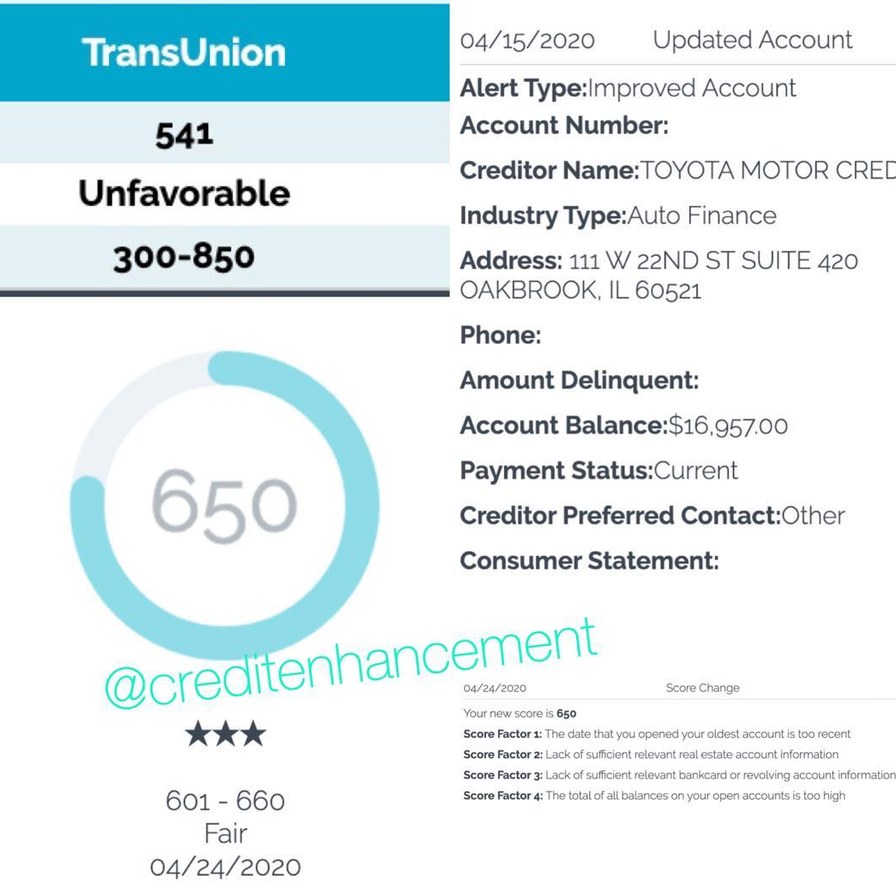
A client’s TransUnion score rose from 541 to 650 in April 2020, a 109-point increase in 20 days, after TransUnion audited the file.

Results vary from person to person and depend on what is in each credit file. Nothing here promises a particular score increase or deletion.
A medical collection is hard to deal with when you cannot see it — the amount, the provider, and whether insurance ever paid it. For a dollar, you can read every medical collection on all three reports and see the facts as the bureaus list them.
Facts first, then a plan. The look costs a dollar.
See My Medical Collection Entries
$1 opens 7 days with MyScoreIQ and the price after that week is $34.99 a month. Cancel any time.
Medical collections have their own rules, and the paperwork matters. We help you check each entry against your own records.
We look at the balance shown and the date of service, and check them against your bill and insurance paperwork.
We explain the bureau rule that paid medical collections are removed from credit reports, and check whether a paid account is still showing.
We explain the rule that unpaid medical collections under $500 are excluded from credit reports, and check whether an entry that small is still listed.
We look for entries where insurance paid the bill, the provider billed the wrong person, or the same visit shows up twice.
We go over whether the entry has inaccurate information that could support a challenge to the bureau or the furnisher.
A medical bill involves the provider, the insurer, and sometimes a collector. Getting the details straight comes first — before you do anything.
Finding inaccurate information is where we focus — not on suggesting that every medical collection can be removed.
We talk through which bills, statements, and insurance papers to gather, so nothing is missing when you act.
We talk through the medical collection entries showing on your credit reports, one by one.
We help you review balances, dates of service, and reporting status — each detail, checked.
We help you pick out information that appears inaccurate, incomplete, or inconsistent with your records.
We explain dispute options, communication strategies, and practical credit habits for going forward.
Under the current bureau rules, paid medical collections are removed from credit reports. If a medical collection you paid is still showing, that is worth checking.
Unpaid medical collections under $500 are excluded from credit reports under the current bureau rules. If one that small is still listed, that is worth checking.
Billing and insurance mix-ups are common with medical accounts. If the bill was paid by insurance, the collection entry may be inaccurate and may be challenged through a factual dispute.
When a medical collection entry has wrong information in it — the wrong amount, the wrong date of service, or a bill that was already paid — that may be challenged through a factual dispute. An accurate entry, though, generally stays on the report.
A medical collection on your report is not the final word on your finances. Let us talk through what you can do. Call (469) 281-1250.