Dealing With Bankruptcy on Your Report
The Case Is Closed — the Paperwork Shouldn't Keep Tripping You Up
A bankruptcy can sit on your report for years after discharge, and the accounts inside it can keep showing balances they no longer have. The first step is reading the entries the way the bureaus wrote them — the case, the dates, and whether the accounts match the discharge.
After a bankruptcy in Dallas, the case itself is only part of the picture. Each account that was part of it gets its own line — and those lines are where the trouble hides. Discharged accounts still showing a balance, accounts marked as open when they were included in the bankruptcy, and dates that do not line up with the filing are common, and each one can hold your file back long after the court closed the case.
We go through the bankruptcy case and every account tied to it with you, one by one, and compare them against your discharge paperwork. A Chapter 7 case generally stays on the report for 10 years and a Chapter 13 for 7 years, and nobody can promise the case itself will come off early — but an account with wrong information after discharge may be challenged through a factual dispute.
These are actual results from past clients, previously shared on Instagram. Every credit file is different, so treat these as examples of what the process can look like, not as a promise of what yours will do.
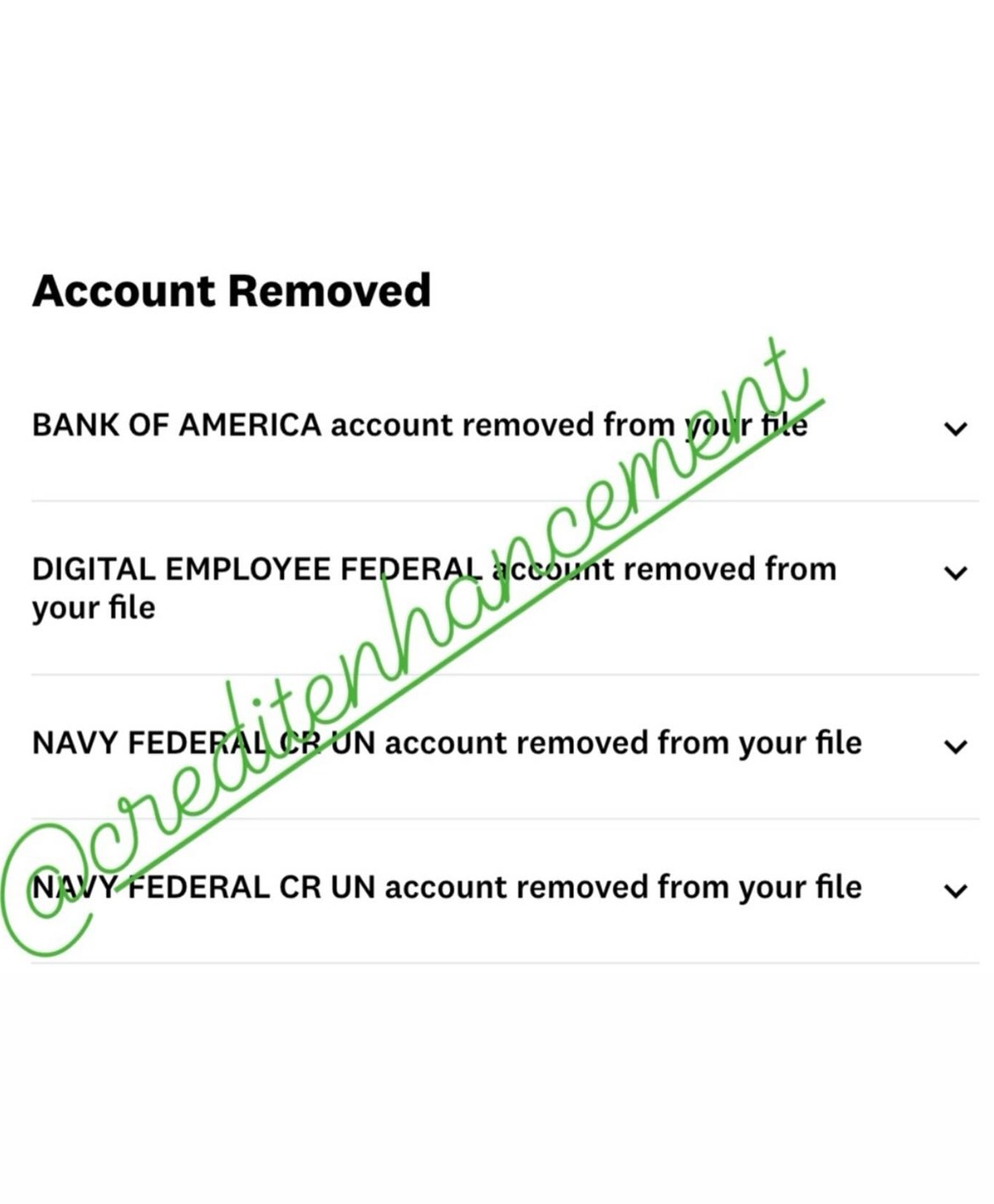
Four accounts removed from a client's file in February 2024: Bank of America, Digital Employee Federal, and two Navy Federal accounts.
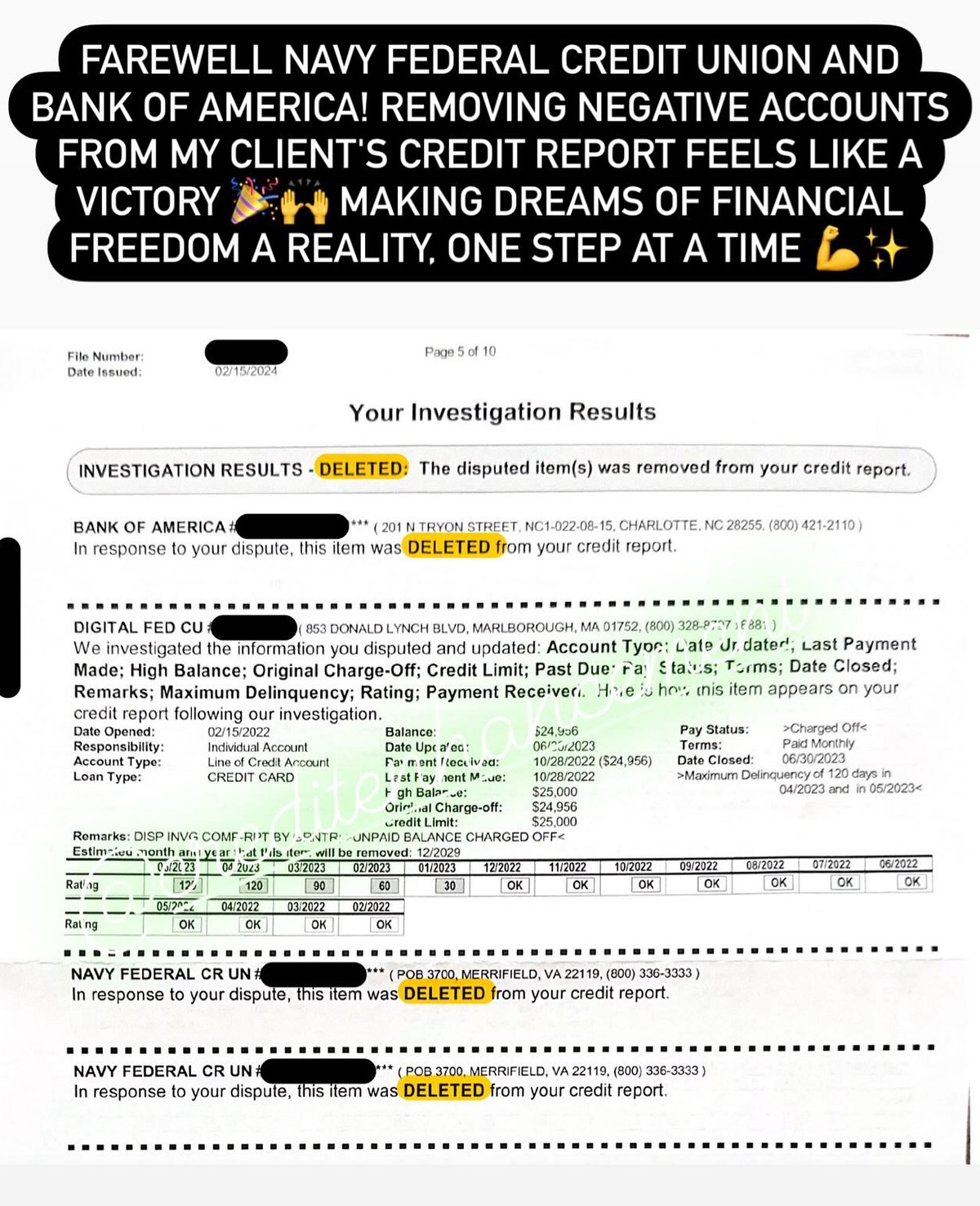
A February 2024 bureau investigation letter showing a Bank of America account and two Navy Federal accounts deleted from a client's credit report after dispute.
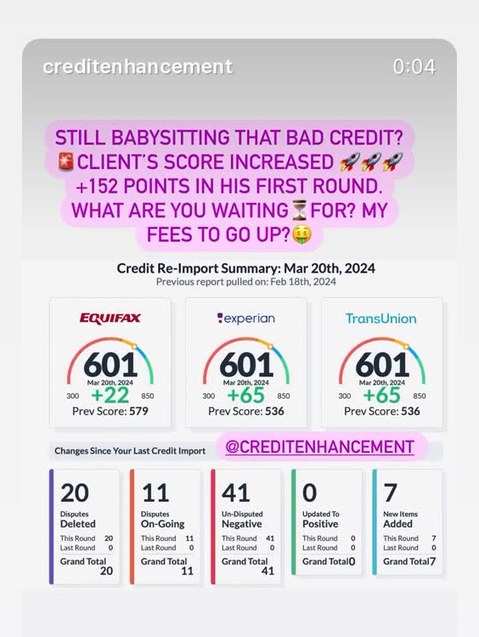
In a first round in March 2024, 20 disputes were deleted and all three bureaus landed at 601: Equifax up 22 points from 579, Experian up 65 from 536, and TransUnion up 65 from 536.
Results vary from person to person and depend on what is in each credit file. Nothing here promises a particular score increase or deletion.
A bankruptcy is hard to deal with when you cannot see it — the case, the discharge date, and every account that was included in it. For a dollar, you can read every bankruptcy entry on all three reports and see the facts as the bureaus list them.
Facts first, then a plan. The look costs a dollar.
$1 opens 7 days with MyScoreIQ and the price after that week is $34.99 a month. Cancel any time.
Post-bankruptcy cleanup is mostly about the accounts inside the case. We help you check each one against the discharge.
We look for accounts that were discharged but still show a balance, and check them against your discharge paperwork.
We check whether each account in the case is marked correctly, and whether any account that should be marked that way is not.
We explain the reporting timeline for each chapter — generally 10 years for Chapter 7 and 7 years for Chapter 13 — and check the dates on your file.
We look at accounts that were not part of the bankruptcy, and check that they are not mistakenly lumped in with it.
We go over whether an entry has inaccurate information that could support a challenge to the bureau or the furnisher.
A bankruptcy file has a case, a discharge, and dozens of account lines. Getting the details straight comes first — before you do anything.
Finding inaccurate information is where we focus — not on suggesting that the bankruptcy case itself can be removed early.
We talk through practical habits that build the file back up after discharge, step by step.
We talk through the bankruptcy case and the accounts tied to it on your credit reports, one by one.
We help you review discharge dates, balances, and account status — each detail, checked.
We help you pick out information that appears inaccurate, incomplete, or inconsistent with your discharge paperwork.
We explain dispute options and practical credit habits for going forward.
A Chapter 7 bankruptcy generally stays on a credit report for 10 years from the filing date, and a Chapter 13 generally stays for 7 years. The reporting rules decide the timeline.
A discharged account should generally show a zero balance and be marked as included in the bankruptcy. If it still shows a balance, that may be inaccurate information that can be challenged through a factual dispute.
An accurately reported bankruptcy case generally stays for its full reporting period. What can be challenged is inaccurate information in the case or in the accounts tied to it.
It means the account was part of the bankruptcy case. An account that was included should be marked that way, and one that was not included should not carry that mark.
A bankruptcy on your report is not the final word on your finances. Let us talk through what you can do. Call (469) 281-1250.