Dealing With Identity Theft
Someone Else Opened Accounts in Your Name — Your Report Shouldn't Carry Their Debts
Finding an account you never opened is frightening, and the damage spreads fast — new cards, new loans, new collections, all in your name. The first step is reading the entries the way the bureaus wrote them, and gathering the proof that the accounts are not yours.
Identity theft in Dallas often starts with a single strange account — a card from a store you never visited, a loan from a lender you never called — and then the entries multiply. The accounts may show addresses you never lived at, in neighborhoods from Deep Ellum to North Dallas that have nothing to do with you. Each one needs to be matched against the report of the theft, so the bureau can see which entries belong to the fraud and which are genuinely yours.
We go through each suspicious entry with you and help you put together the file the bureaus ask for: a police report or an FTC identity-theft report, the list of items that match the theft, and proof of who you are. Under section 605B of the Fair Credit Reporting Act, a bureau must block fraudulent information when that file is in place. Nobody can promise any particular account will be blocked — the bureau decides on the evidence — but a complete, matching file is the way the law sets up the challenge.
These are actual results from past clients, previously shared on Instagram. Every credit file is different, so treat these as examples of what the process can look like, not as a promise of what yours will do.
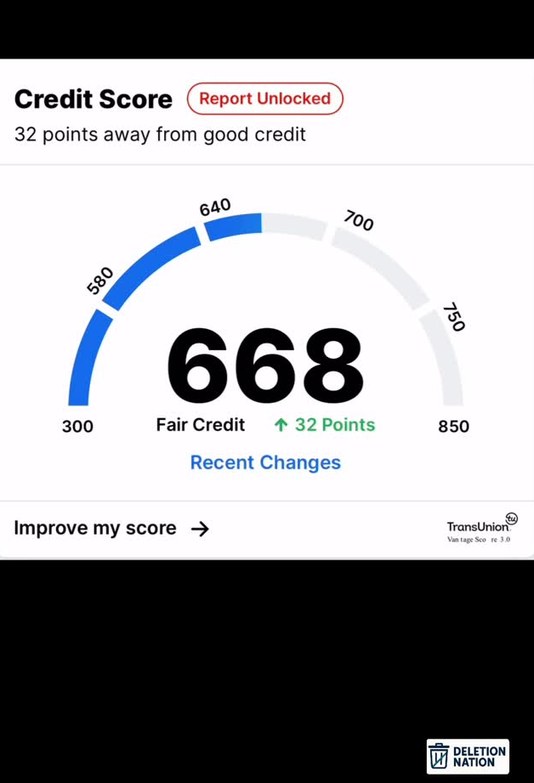
Three TransUnion clients cleared back to back in August 2025. One client had 8 inquiries deleted in a single sweep; another had Apple Card, Comenity, CareCredit, and USAA accounts removed; a third had a Synchrony account deleted. One client rose 32 points overnight, to 668.
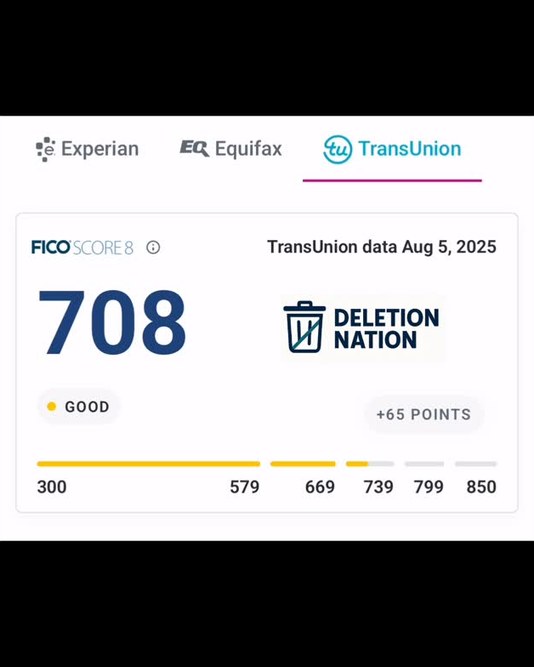
A client’s TransUnion FICO score reached 708 in August 2025, up 65 points in a single update.
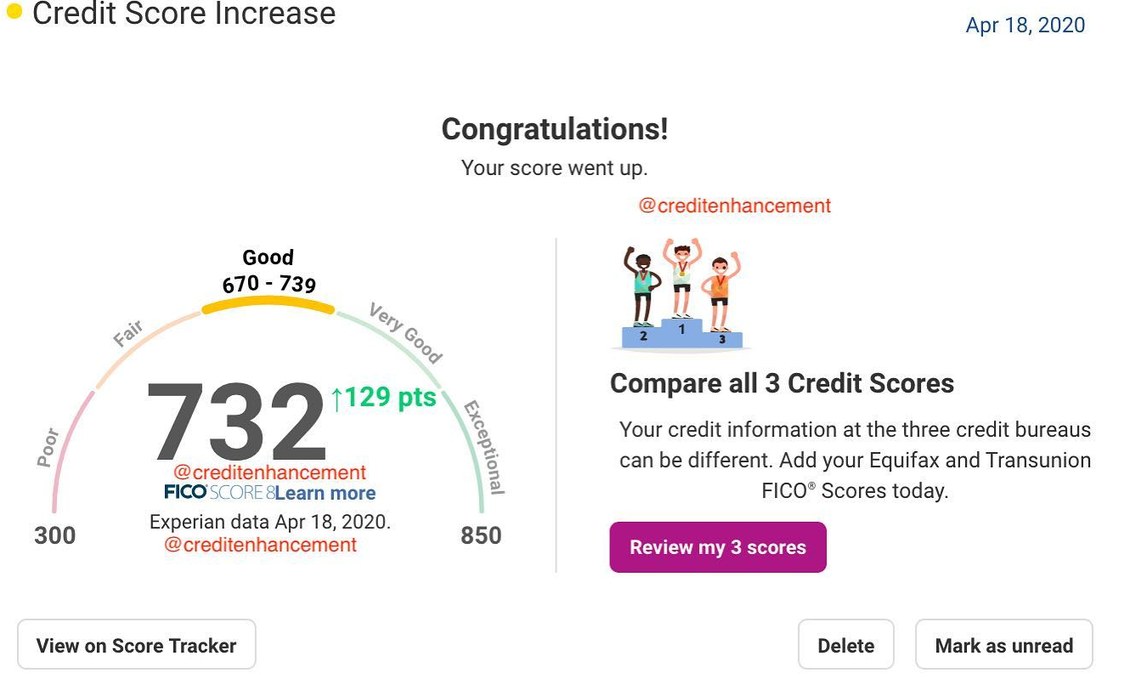
A client's Experian FICO score rose 129 points to 732 in April 2020.
Results vary from person to person and depend on what is in each credit file. Nothing here promises a particular score increase or deletion.
Identity theft is hard to deal with when you cannot see it — which accounts are fraudulent, the balances, and which bureau is reporting them. For a dollar, you can read every suspicious entry on all three reports and see the facts as the bureaus list them.
Facts first, then a plan. The look costs a dollar.
$1 opens 7 days with MyScoreIQ and the price after that week is $34.99 a month. Cancel any time.
An identity-theft case runs on matching paperwork. We help you line up each entry with the report of the theft.
We explain what goes into the report of the theft, and help you check that it covers the accounts you are challenging.
We help you list each fraudulent account and match it to the theft report, so the bureau can see which entries are in question.
We explain the identification the bureaus ask for, and help you check that your file is complete before it goes in.
We help you separate the fraudulent accounts from the ones that are really yours, so nothing real gets caught up in the challenge.
We go over how the section 605B block works, and whether your file has what the bureau asks for before it is sent.
An identity-theft case has a report, a list of items, and identification to gather. Getting the file straight comes first — before you do anything.
Finding the entries that are not yours — and keeping the ones that are — is where we focus.
We talk through which reports, lists, and documents to gather, so the file is complete when it goes to the bureau.
We talk through the entries on your credit reports that do not look like yours, one by one.
We help you review account dates, balances, and addresses — each detail, checked.
We help you put together the theft report, the matching item list, and your identification.
We explain the 605B block process and practical steps for protecting your file going forward.
Section 605B of the Fair Credit Reporting Act says a bureau must block fraudulent information when you provide a police report or FTC identity-theft report, the matching items, and proof of your identity. The bureau decides on the evidence you send.
One of them is part of the file the bureau asks for. An FTC identity-theft report can be made online, and a police report can be made with your local department. We can talk through which one fits your situation.
We go through your reports with you and compare each account against what you know — accounts you never opened, addresses you never lived at, and activity that does not match your life.
Yes — when an account is not yours, it can be challenged with the file described above: the theft report, the matching items, and proof of identity. The bureau reviews the evidence and decides.
Identity theft on your report is not the final word on your finances. Let us talk through what you can do. Call (469) 281-1250.